Picture this. A paralegal spends three hours every Monday pulling case updates from five different systems. She copies dates, types notes, checks statuses, and sends summaries to attorneys. By the time she finishes, half the morning is gone. This is a real problem in legal offices everywhere.
Automated case information changes this completely. Instead of manual searching, the system does the work. It pulls data, updates records, and delivers accurate case details in seconds. For legal teams under pressure, this is not just helpful. It is essential.
Why Manual Case Tracking Slows Everything Down
Most legal teams still rely on spreadsheets, emails, and shared folders to track case progress. This creates invisible problems that build up over time.
First, human error sneaks in easily. An incorrect date or a missed update can delay hearings or cause compliance issues. Second, searching through multiple platforms wastes time that attorneys could use for actual legal work. Third, when a client calls for a status update, staff often scramble just to answer a simple question.
These delays also affect the client experience. Clients want fast, clear answers. When a firm cannot provide them quickly, trust weakens.
Automated case information solves this by creating one reliable source. Every update, filing, hearing date, and document lives in one place. Staff access it instantly without hunting through folders or inboxes.
How Automated Case Information Actually Works
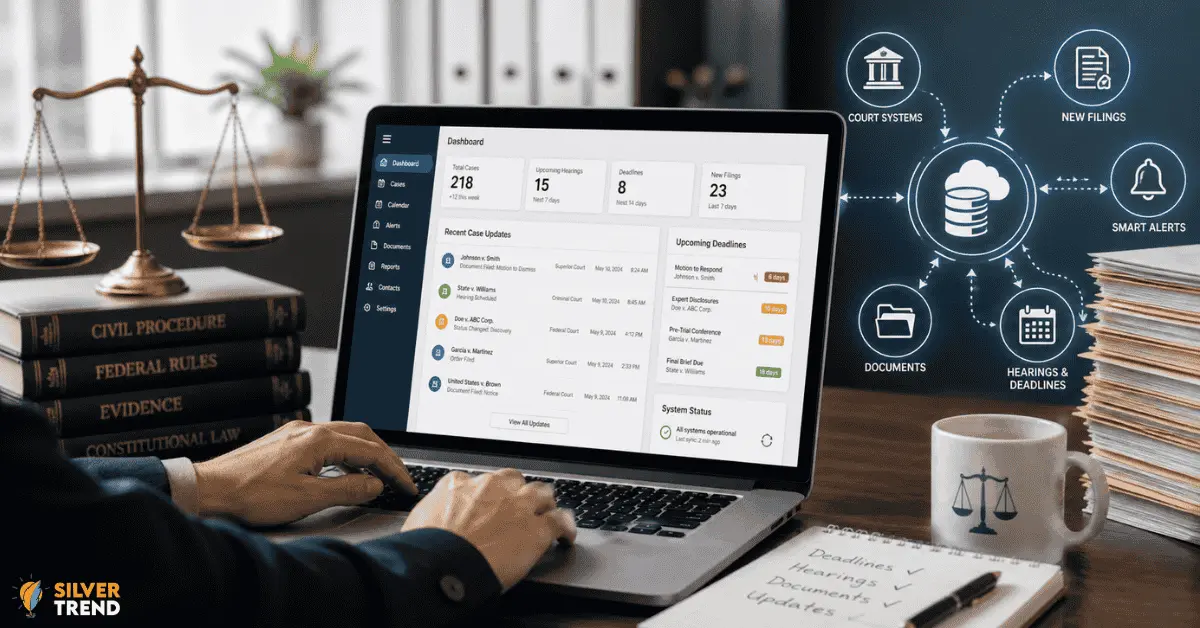
The system connects to court databases, internal case management software, and sometimes external legal research tools. It pulls updates automatically based on case numbers or party names.
When a court files a new document or schedules a hearing, the system captures that information. It then organizes the data into readable formats. Attorneys receive alerts. Dashboards update. No one needs to check manually.
Some advanced platforms also use rules-based logic. For example, if a deadline is approaching within 14 days, the system flags it automatically. If a case status changes from “pending” to “closed,” the team gets notified right away.
This kind of automated case information removes the guesswork. Teams always know where each case stands without asking around or digging through files.
What Good Automated Systems Include
Not every platform works the same way. The best ones share some key features:
- Real-time sync with court filing systems
- Smart alerts for deadline changes and status updates
- Searchable case history going back years
- Role-based access so each team member sees what they need
- Audit trails that show every update with a timestamp
These features reduce confusion and support accountability. When something goes wrong, you can trace exactly what happened and when.

The Surprising Impact on Case Outcomes
Here is something many people overlook. Automated case information does not just save time. It can directly affect how well a case goes.
When attorneys have complete, up-to-date information, they make better decisions. They spot patterns faster. They notice when similar cases were decided a certain way. They prepare stronger arguments because they are not working with outdated data.
Missing a deadline because of a manual error has serious consequences. It can mean a dismissal, a fine, or a damaged client relationship. Automated systems reduce this risk significantly. Deadlines are tracked continuously, not just when someone remembers to check.
Law firms that adopt automated case information often report fewer malpractice concerns linked to missed filings. That alone makes the investment worthwhile.
Practical Steps to Get Started
If your team is still managing cases manually, moving to an automated system does not have to feel overwhelming. Here is a simple way to approach it:
Step 1 – Audit your current process. Write down every step your team takes to track a case from filing to closing. Identify which steps waste the most time.
Step 2 – Choose a platform that fits your case types. Criminal, civil, family, and immigration cases all have different data needs. Pick a tool designed for your specific work.
Step 3 – Start with one case type. Do not try to automate everything at once. Pick the most common case type and test the system there first.
Step 4 – Train your team properly. Automated case information only works if people use it correctly. Spend time on proper onboarding rather than rushing adoption.
Step 5 – Review results after 30 days. Check if deadlines are being caught earlier. See if the time spent on status updates has dropped. Adjust your setup based on what you find.
Smaller Firms Can Benefit Too
Many small law offices think automation is only for large firms with big budgets. That is simply not true anymore. Several affordable platforms now offer automated case information tools designed for solo attorneys and small teams.
Even a two-person office can save 6 to 8 hours a week by automating routine case tracking. Over a year, that adds up to hundreds of hours redirected toward billable work.
The cost of not automating is often higher than the cost of the software itself. When you factor in missed deadlines, rework, and client frustration, manual tracking becomes very expensive.
Automated case information is not a trend. It is quickly becoming the standard way legal professionals manage their work. Firms that adopt it now will be better positioned, more efficient, and more trusted by their clients. The shift is simpler than most teams expect, and the results speak clearly.