Most people leave their doctor’s office knowing their LDL is high. But there is another number quietly doing damage in the background. That number is your VLDL cholesterol. It rarely gets talked about. Yet it may be one of the biggest reasons heart disease keeps spreading.
Let’s change that today.
The One Number Most Blood Tests Hide From You
When your doctor hands you a cholesterol report, you usually see LDL, HDL, and total cholesterol. But VLDL cholesterol is often just quietly calculated in the background. It is not always shown clearly. Many patients never even ask about it.
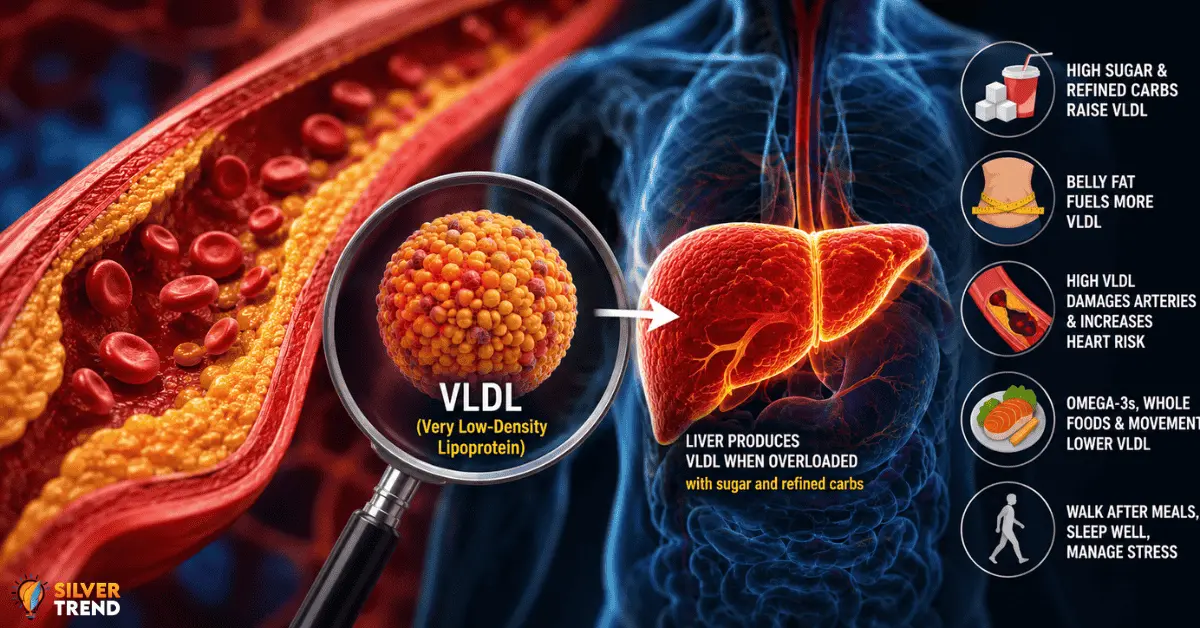
VLDL stands for Very Low-Density Lipoprotein. Your liver makes it. It carries something called triglycerides through your blood. Once it drops off those triglycerides to your cells, it turns into LDL. That is right. High VLDL cholesterol is actually one of the main reasons your LDL goes up in the first place.
So lowering LDL without considering VLDL cholesterol is like mopping the floor while the tap is still running.
How Your Liver Creates the Problem
Your liver makes VLDL cholesterol when it has too much sugar or fat to deal with. Think about it this way. When you eat more carbohydrates than your body needs, your liver converts the extra into triglycerides. Then it packages those triglycerides into VLDL particles and sends them into your bloodstream.
The more sugar and refined carbs you eat, the harder your liver works. The harder your liver works, the more VLDL cholesterol it pumps out. This is why people who eat low-fat diets but eat lots of bread, rice, and sugar often still have poor cholesterol numbers.
Fat is not always the villain here. Sugar often is.

What High VLDL Cholesterol Actually Does Inside Your Body
Here is something most articles skip. VLDL particles are not just carriers. They are also inflammatory. When VLDL cholesterol stays high for a long time, it damages the walls of your arteries. It makes the inner lining rough and sticky. Plaque builds up there.
This plaque narrows your arteries. Blood flow slows down. Your heart has to pump harder. Over time, this raises your risk of a heart attack and stroke.
High VLDL cholesterol is also closely linked to metabolic syndrome. That is a group of conditions including high blood pressure, high blood sugar, belly fat, and abnormal cholesterol. If you have two or three of those together, your VLDL is almost certainly elevated.
This is not a small thing. Metabolic syndrome affects millions of people who have no idea they have it.
The Surprising Link Between Belly Fat and VLDL
Here is an insight that most people have never heard. Belly fat is not just stored energy. It is an active organ. It releases fatty acids directly into your bloodstream. Your liver picks those up and uses them to make even more VLDL cholesterol.
So when someone loses belly fat, their VLDL cholesterol often drops noticeably. Not because of medication. Not because of a special supplement. Simply because the liver has fewer fatty acids to work with.
This means waist size can sometimes predict VLDL levels better than diet alone.
Practical Steps That Actually Lower VLDL Cholesterol
You do not need a complicated plan. You need the right focus.
Cut the sugar before you cut the fat. Reducing added sugar and refined carbohydrates has a stronger effect on VLDL cholesterol than reducing dietary fat. Swap white bread for whole grains. Skip sweetened drinks entirely.
Eat more omega-3 fatty acids. Fish like salmon, sardines, and mackerel contain omega-3s that directly reduce triglycerides. When triglyceride levels fall, VLDL cholesterol levels fall with them. Even two servings of fatty fish per week make a measurable difference.
Move your body after meals. A short 15-minute walk after eating helps your muscles take up blood sugar before the liver converts it into triglycerides. This small habit consistently lowers VLDL cholesterol over time.
Sleep more than you think you need. Poor sleep raises cortisol. High cortisol increases blood sugar. High blood sugar feeds your liver exactly what it needs to make more VLDL cholesterol. Seven to eight hours of sleep is not optional for good cholesterol health.
Limit alcohol. Alcohol is processed by the liver just like sugar. It directly boosts VLDL production. Even moderate drinking can raise VLDL cholesterol in people who are already at risk.
One Last Thing Worth Knowing
A normal VLDL cholesterol level ranges from 2 to 30 mg/dL. Above 30 is considered high. Above 40 significantly raises cardiovascular risk. If your doctor has never mentioned your VLDL number, ask for it specifically at your next visit.
Managing VLDL cholesterol is not just about adding healthy habits. It is about understanding the real reason behind your numbers and fixing the root cause rather than chasing symptoms.
The people who genuinely improve their heart health are the ones who ask the right questions. Now you know exactly which question to ask.