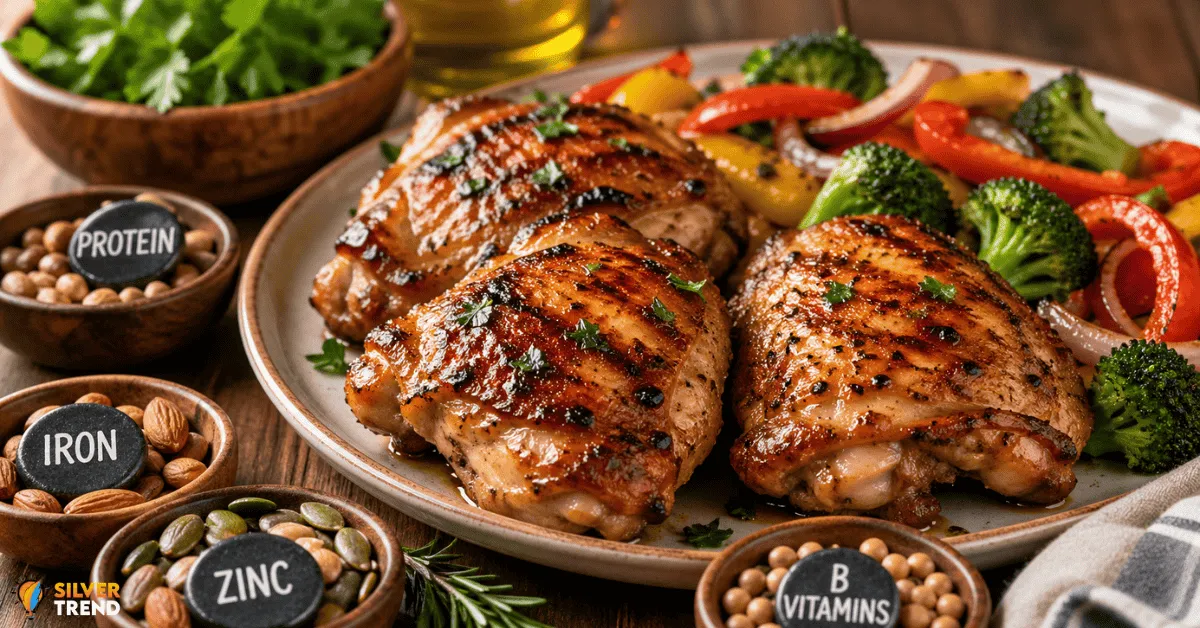
Chicken thigh nutrition is something many people overlook. Most people reach for chicken breast. But chicken thighs are just as healthy. In fact, they offer some benefits that chicken breasts do not. Whether you want to build muscle, eat healthy fats, or save money, chicken thighs are a smart choice.
Let’s break it all down simply and easily.
What Is a Chicken Thigh?
A chicken thigh is the upper part of the chicken’s leg. It has slightly more fat than a chicken breast. But that fat is mostly healthy. You can buy chicken thighs with or without the bone. You can also get them with or without the skin.
A 3.5-ounce (100g) serving of cooked chicken thigh (skinless, boneless) gives you roughly:
| Nutrient | Amount |
| Calories | 179 |
| Protein | 24g |
| Fat | 9g |
| Iron | 7% of Daily Value |
| Zinc | 15% of Daily Value |
| Vitamin B12 | 10% of Daily Value |
This makes chicken thigh nutrition quite impressive for such a small serving.
7 Powerful Health Benefits of Chicken Thigh Nutrition
1. High in Protein
Chicken thighs are loaded with protein. Protein helps your body build and repair muscles. It also keeps you feeling full for longer. If you are active or working out, eating protein-rich foods like chicken thighs is very helpful. Each serving provides about 24 grams of protein. That is a great amount from one food.
2. Rich in Healthy Fats
Chicken thigh nutrition includes more fat than chicken breast. But most of this fat is unsaturated fat. Unsaturated fats are good for your heart. They help lower bad cholesterol levels. So do not be afraid of the fat in chicken thighs. It is mostly the healthy kind.
3. Great Source of Iron
Iron is very important for your blood. It helps carry oxygen to all parts of your body. Chicken thigh nutrition offers more iron than chicken breast. This makes it a smart food choice for people who tire easily or have low iron levels. Kids, teens, and women especially need enough iron daily.

4. Packed with Zinc
Zinc is a mineral your body needs to fight sickness. It also helps heal cuts and wounds faster. Chicken thighs are a solid source of zinc. Eating chicken thighs regularly can help keep your immune system strong. This is a major reason chicken thigh nutrition stands out among other meats.
5. Good for Brain Health
Chicken thighs contain B vitamins, especially vitamin B12 and niacin. These vitamins are important for your brain. They help your nerves work properly. They also help your body turn food into energy. B vitamins are hard to get from plant foods, which is why chicken is such a helpful food.
6. Budget-Friendly and Easy to Cook
One of the best things about chicken thighs is their price. They cost less than a chicken breast. Yet chicken thigh nutrition is very close in value. You get plenty of protein and vitamins without spending much. Chicken thighs are also hard to overcook. They stay juicy even when cooked at high heat.
7. Supports Muscle Recovery
After a workout, your muscles need protein and nutrients to recover. Chicken thigh nutrition supports this process very well. The mix of protein, iron, zinc, and B vitamins helps your muscles repair faster. Many athletes and fitness lovers eat chicken thighs as a regular part of their meals.
Should You Choose Skin-On or Skinless?
The skin adds extra fat and calories. If you are watching your calorie intake, go for skinless chicken thighs. But if you need more healthy fats or calories, skin-on is fine too. Both versions still offer strong chicken thigh nutrition.
Simple Tips for Cooking Chicken Thighs
Here are a few easy ways to enjoy chicken thighs:
- Bake them at 400°F for 25 to 30 minutes
- Grill them with a simple seasoning of salt, pepper, and garlic
- Add them to soups or rice dishes for extra flavor
- Marinate overnight for a juicy and tender result
Final Thoughts
Chicken thigh nutrition is something worth paying attention to. These small cuts of meat are packed with protein, vitamins, and healthy fats. They are cheap, easy to cook, and very tasty. Whether you are eating for fitness, health, or budget, chicken thighs deliver real value. Try adding them to your meals a few times a week and feel the difference.