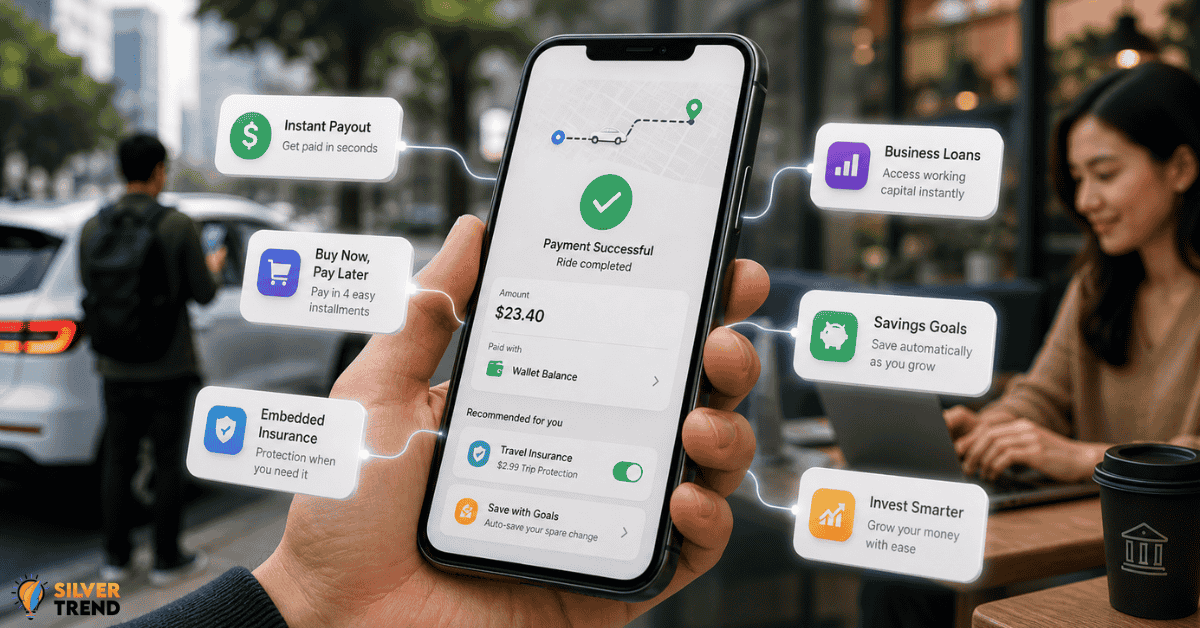
Imagine paying for your ride-share trip without ever opening a banking app. No redirect. No card details. The payment happens directly in the app you are already using. That is embedded finance at work, and it is spreading fast.
Embedded finance solutions are financial tools built directly into non-financial apps or platforms. Instead of going to a bank, users handle money inside tools they already trust. Think of insurance offered during checkout or a loan approved inside a shopping app. The finance layer is hidden, smooth, and instant.
This is not a small trend. In 2026, embedded finance solutions are reshaping how everyday people interact with money.
Why Businesses Are Racing to Adopt Embedded Finance Solutions
A few years ago, only banks handled finance. Now, any business with a digital platform can offer financial services to its users. That shift is a big deal.
Here is why businesses love this model:
- More revenue streams. A logistics company can offer truckers instant pay advances. A retailer can offer buy-now-pay-later at checkout. Both earn fees without becoming a bank.
- Better customer loyalty. When users can borrow, save, or insure inside your platform, they have less reason to leave.
- Faster user decisions. Friction kills sales. Embedded finance solutions remove friction by keeping everything in one place.
This is not just theory. Platforms like Shopify, Grab, and Uber have all built financial layers directly into their core products. They saw higher engagement and repeat usage as a result.
How Embedded Finance Solutions Actually Work
Behind every smooth payment or instant loan approval is a layered tech stack. Understanding this helps businesses make smarter choices.
The key players are:
- The Platform (You) This is the app or website where users spend time. It could be an e-commerce site, a gig-work platform, or even a health app.
- The Enabler (BaaS Provider) Banking-as-a-Service companies like Synapse, Railsr, or Unit provide the financial infrastructure. They hold licenses, manage compliance, and handle the backend.
- The End User: Your customer who never has to visit a bank but still gets banking features.
Embedded finance solutions work by connecting these layers through APIs. An API is like a digital bridge. It lets your app communicate with financial systems in real time without having to build them from scratch.
When a user taps “Get Loan” on a gig platform, that tap triggers an API call. The BaaS provider checks eligibility, approves the loan, and deposits funds. The whole thing can happen in under 30 seconds.

The Hidden Layer Most People Miss
Most conversations about embedded finance solutions focus on payments. But there is a hidden layer that is growing fast: embedded insurance and embedded wealth tools.
A user buying a plane ticket can get travel insurance offered right at checkout. A freelancer saving inside a work platform can access automated investment suggestions. These are not standalone financial products. They are woven into moments where users are already making decisions.
This context-driven finance is more powerful than traditional banking because the timing is perfect. You offer financial help exactly when someone needs it, not after they hunt for it.
Risks That Come With Embedded Finance Solutions
Speed and convenience have a price. Businesses that rush into embedded finance without proper planning often hit real problems.
Compliance is complex. Financial services are heavily regulated. When you embed a loan product, you take on legal risk. You need to understand local laws, data rules, and lending regulations.
Data privacy matters more. Embedded finance solutions collect detailed spending behavior. A data breach here is far more damaging than a typical platform hack.
Customer trust is fragile. If a payment fails or a loan approval glitches, users blame your platform. Not the bank behind it. You own the experience.
The best way to handle these risks is to partner with embedded finance providers that have strong compliance frameworks and transparent SLAs. Do not cut corners when picking your BaaS partner.
What Makes a Strong Embedded Finance Strategy in 2026
Not every business needs to offer loans or insurance. The best embedded finance strategies are focused, not feature-heavy.
Start by asking: where does my user face a financial decision inside my platform? That moment is your opportunity.
A healthcare app might embed health savings tools. A marketplace for freelancers might embed instant payouts. Small business software might include expense management. Each of these is a natural fit.
Powerful embedded finance solutions are the ones users do not even notice. They feel like a natural part of the product, not a feature added to make money.
The financial world used to be separate from everything else. Now it is woven into the tools people use every day. Businesses that understand embedded finance solutions early have a real edge. Not because finance is cool, but because removing friction always wins. The companies making money invisible are the ones users trust most.