Most people only visit an eye doctor when something feels wrong. But glaucoma does not feel like anything, at least not at first. By the time you notice a problem, serious damage may already be done. This is why an eye examination glaucoma is one of the most important health checks you can get, even if your eyes feel perfectly fine.
Glaucoma quietly steals your side vision first. It moves slowly and without pain. That is what makes it so dangerous and so easy to miss without proper testing.
Why Regular Eye Examination Glaucoma Screening Matters More Than You Think
Many people believe vision problems always come with warning signs. Glaucoma breaks that rule completely. Studies show that nearly half of people living with glaucoma do not even know they have it. The optic nerve, which carries visual signals from your eye to your brain, gets damaged slowly over time. Once those nerve fibers are gone, they do not grow back.
This is not meant to scare you. It is meant to help you understand why waiting for symptoms is a risky choice.
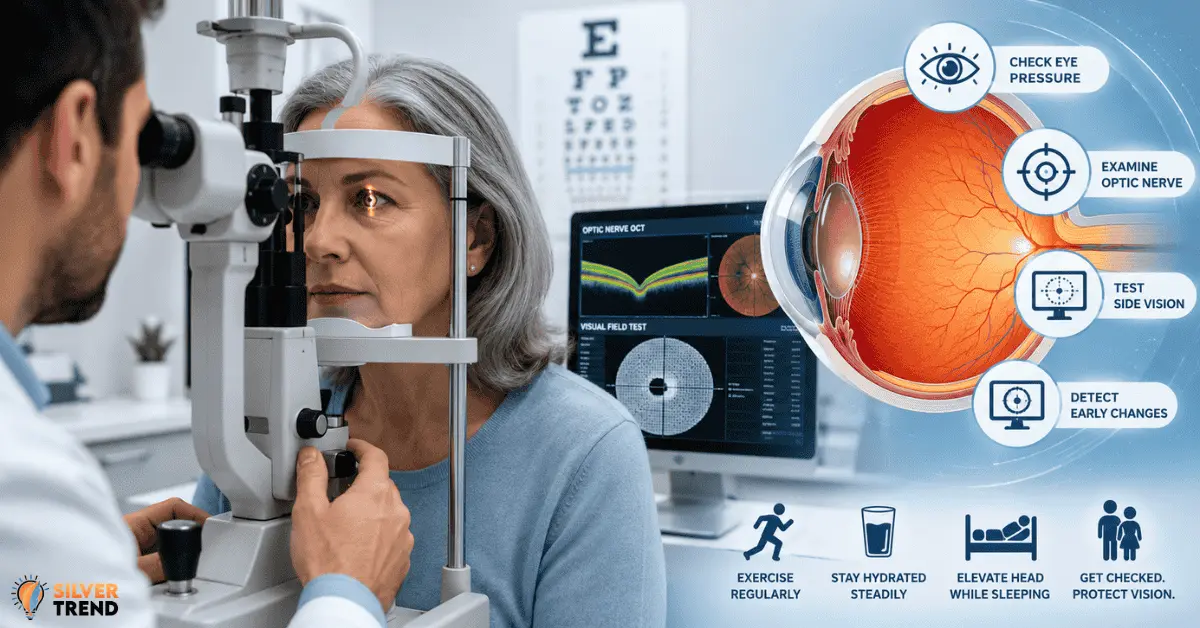
An eye examination for glaucoma does not take long. A trained eye doctor can check your eye pressure, examine your optic nerve, and test your peripheral vision all in one visit. These simple checks can catch trouble long before your vision is affected.
Think of it like checking your blood pressure. You cannot feel high blood pressure either, but checking it regularly helps you act early. Glaucoma works the same way.
Who Should Get Tested and How Often
Not everyone has the same risk. Some people need to start glaucoma screening for the eyes earlier and more often. Here is a simple guide:
- Age 40 and above: Get a full eye exam every 1 to 2 years
- Age 60 and above: Go every year without fail
- Family history of glaucoma: Start screening in your 30s
- People with diabetes: Annual exams are strongly recommended
- Those of African or Hispanic descent: Higher risk, earlier and more frequent checks needed
If you wear strong glasses or have had an eye injury before, mention this to your doctor. These factors can also raise your risk level.

What Actually Happens During a Glaucoma Eye Examination
Many people feel nervous about eye tests because they do not know what to expect. The truth is, most parts of a glaucoma eye examination are quick and painless.
Tonometry measures the pressure inside your eye. High eye pressure is a key warning sign. The doctor may use a small puff of air or a gentle instrument to check this. It feels a little strange but does not hurt.
Ophthalmoscopy lets the doctor look directly at your optic nerve. They use a bright light and sometimes dilating drops to get a clear view. Dilating drops make your pupils wide so the doctor can see more. Your vision may be blurry for a few hours afterward, so plan accordingly.
Visual field test checks your side vision. You sit in front of a screen and press a button when you see flashes of light. This test maps out exactly where your vision is strong and where it may be fading.
OCT scan is a newer technology that takes detailed images of your optic nerve layers. It can spot tiny changes even before any vision loss begins. Not all clinics offer this, but it is worth asking about.
These tests together build a complete picture. One test alone is not enough. A full eye examination glaucoma review uses all of these tools together.
A Common Mistake Many Patients Make
Some people go for a basic vision check and assume they have been tested for glaucoma. This is not always true. A standard glasses prescription check does not automatically include glaucoma screening. You need to ask specifically for a full eye examination that includes glaucoma testing.
Always ask your eye doctor directly: “Did you check me for glaucoma today?” That one question can make a real difference.
Living Smartly After Your Eye Examination Glaucoma Check
If your results come back normal, do not celebrate and forget. Glaucoma risk builds over time. Keep your next appointment. If your doctor finds early signs, treatment options are actually very good at this stage. Eye drops, laser therapy, or minor procedures can slow or stop the damage when caught early.
Some lifestyle habits also support eye health. Regular exercise helps lower eye pressure naturally. Drinking large amounts of water quickly in one sitting can temporarily raise eye pressure, so sip water steadily instead. Avoiding tight neckties or collars that press on neck veins is another small but useful tip most people never hear about.
Sleep position matters too. Sleeping with your head slightly elevated may help reduce overnight spikes in eye pressure in people already diagnosed.
Glaucoma does not have to lead to blindness. The key is not waiting. A routine eye examination glaucoma screening visit, done consistently, gives you the best possible chance of keeping your vision strong for life. Book yours today and encourage the people you care about to do the same.