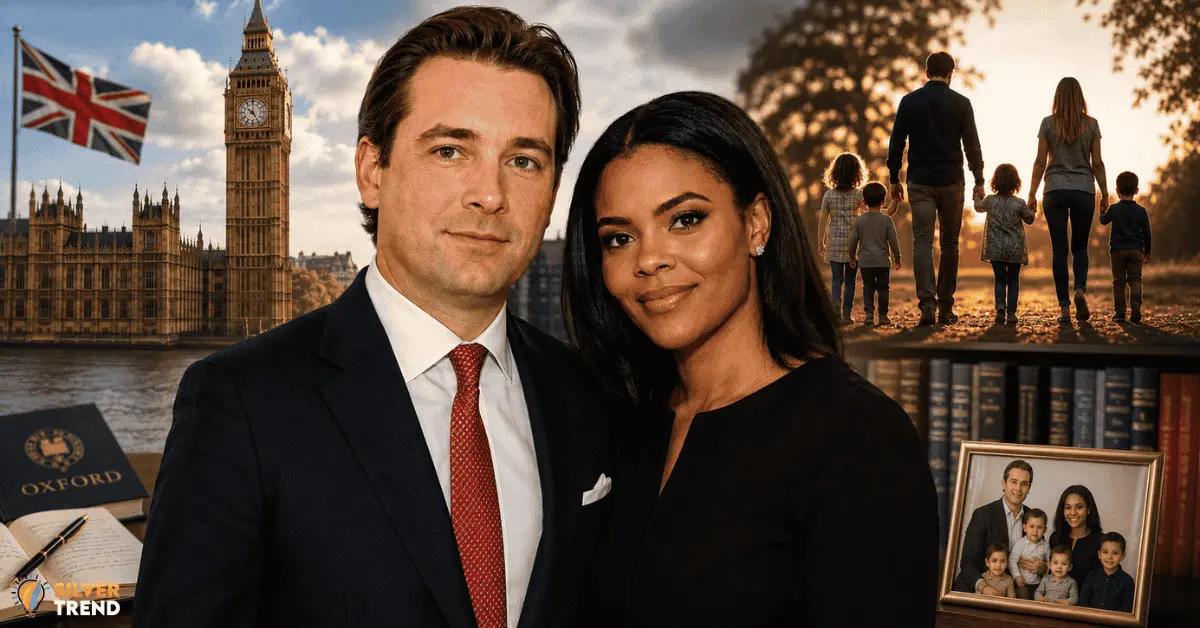
Have you ever wondered how someone can stay mostly private while being married to one of the most talked-about political commentators in America? That question often comes up when people search for candace owens husband.
George Farmer is much more than a spouse standing beside a public figure. He has built his own career, developed strong political connections, and created a family life that attracts public interest. His story includes business success, faith, politics, and a very fast-moving romance.
Why Candace Owens Husband Draws Attention
Many people first learn about George Farmer through Candace Owens. However, his background is interesting in its own right.
George Farmer is a British businessman and former executive known for his involvement in conservative political circles. He is also the son of Lord Michael Farmer, a member of the United Kingdom’s House of Lords. This family connection often makes people curious about his upbringing and influence.
Unlike many public spouses, Farmer rarely seeks the spotlight. Yet his work and family connections continue to attract attention from media outlets and online readers.
A Romance That Moved Fast
One of the most surprising details about candace owens husband is how quickly the relationship developed.
Candace Owens and George Farmer met in late 2018 through conservative political circles. After only a short time together, Farmer proposed. Their engagement occurred just weeks after they met, which surprised many observers. The couple married in 2019 and have remained together since then.
Fast relationships often face doubts from outsiders. Yet their marriage has continued for years while both remain active in public life.
More Than a Political Connection
A common mistake is assuming that George Farmer became known only because of his wife.
Before many people recognized the name candace owens husband, Farmer had already established himself in business and politics. He studied at Oxford University and became involved with conservative organizations in the United Kingdom. He later worked in business ventures and public affairs.
His career includes leadership roles connected to media and technology. He also served as CEO of the social media platform Parler during a highly publicized period in the company’s history.
This experience gave him visibility beyond political audiences and introduced him to a broader public.

Family Life Away From Headlines
Public figures often share many details about their families. Candace Owens and George Farmer take a different approach.
The couple has four children and generally keeps their private lives out of the spotlight. While Owens occasionally discusses parenting, both parents limit the amount of personal information shared publicly.
This choice creates a balance between public careers and personal privacy. Many followers appreciate that approach because it keeps the focus on their work rather than constant family exposure.
Some readers searching for candace owens husband are surprised to learn how strongly the couple values a traditional family structure. Their public comments often emphasize parenting, marriage, and faith.
Interesting Details Many People Miss
Several facts about George Farmer are often overlooked:
- He was born in the United Kingdom.
- He comes from a politically connected family.
- He studied theology at Oxford.
- He has worked in both business and media.
- He and Candace Owens became engaged very quickly.
- He is a father of four children.
These details help explain why interest in candace owens husband continues to grow each year.
Faith Plays a Major Role
One part of Farmer’s life that receives less attention is his religious commitment.
People close to the couple often describe faith as a central part of their marriage. Public discussions and interviews have highlighted the importance of religion in their family life and decision-making.
For many readers, this aspect helps explain the strong values that both Farmer and Owens frequently discuss.
Their shared beliefs appear to influence everything from parenting choices to long-term family goals.
What Makes George Farmer Different?
Many political spouses become famous simply because of their partners. George Farmer stands out because he achieved success before marriage.
His background combines business leadership, political involvement, education, and international connections. That mix creates a unique public profile that continues to interest readers searching for information about candace owens husband.
Another factor is his privacy preference. In a world where many public figures constantly share personal updates, Farmer often remains behind the scenes. This naturally increases curiosity about him.
As a result, searches related to Candace Owens husband remain popular among people interested in politics, media, and public figures.
George Farmer’s story is ultimately about more than being married to a well-known commentator. His fast-moving love story, business experience, family values, and political background create a profile that many find fascinating. Whether people agree with his views or not, his journey continues to attract attention in 2026 and beyond.